Your plant is trying to talk to you.
That yellowing leaf. The stunted new growth. The flowers that never quite showed up this season. These aren’t random — they’re signals. Your plant is telling you exactly what it’s missing. You just need to know how to read the signs.
Nutrient deficiency is one of the most common — and most misdiagnosed — problems in home gardening. Most people assume it’s a watering issue, change nothing, and watch their plant slowly decline. The fix is usually simpler than you think. But first, you need to identify what’s actually missing.
Let’s go through the most common deficiencies, what they look like, and exactly how to fix them.
Why Do Nutrient Deficiencies Happen?
Before we get into symptoms, it helps to understand why deficiencies occur in the first place.
Poor soil quality is the most common cause. Potted plants especially are vulnerable — they only have access to whatever nutrients are already in that limited volume of soil. Over time, those nutrients get used up and never replaced.
Overwatering flushes nutrients out of the soil faster than roots can absorb them — a process called leaching.
Wrong soil pH can lock nutrients in the soil even when they’re present. If the pH is off, roots simply can’t absorb what’s there.
Fast-growing plants consume nutrients quickly. If you’re not feeding them regularly, they’ll run out of fuel mid-season.
Now — let’s look at what your plant is showing you.
1. Yellow Leaves All Over → Nitrogen Deficiency
What it looks like: Older, lower leaves start turning pale yellow and eventually drop. The yellowing spreads upward over time. New growth may appear smaller and lighter than usual.
What’s happening: Nitrogen is the engine of leafy, green growth. Without enough of it, your plant can’t produce chlorophyll — the green pigment responsible for photosynthesis. Less chlorophyll means less food production, which means a plant that’s slowly running on empty.
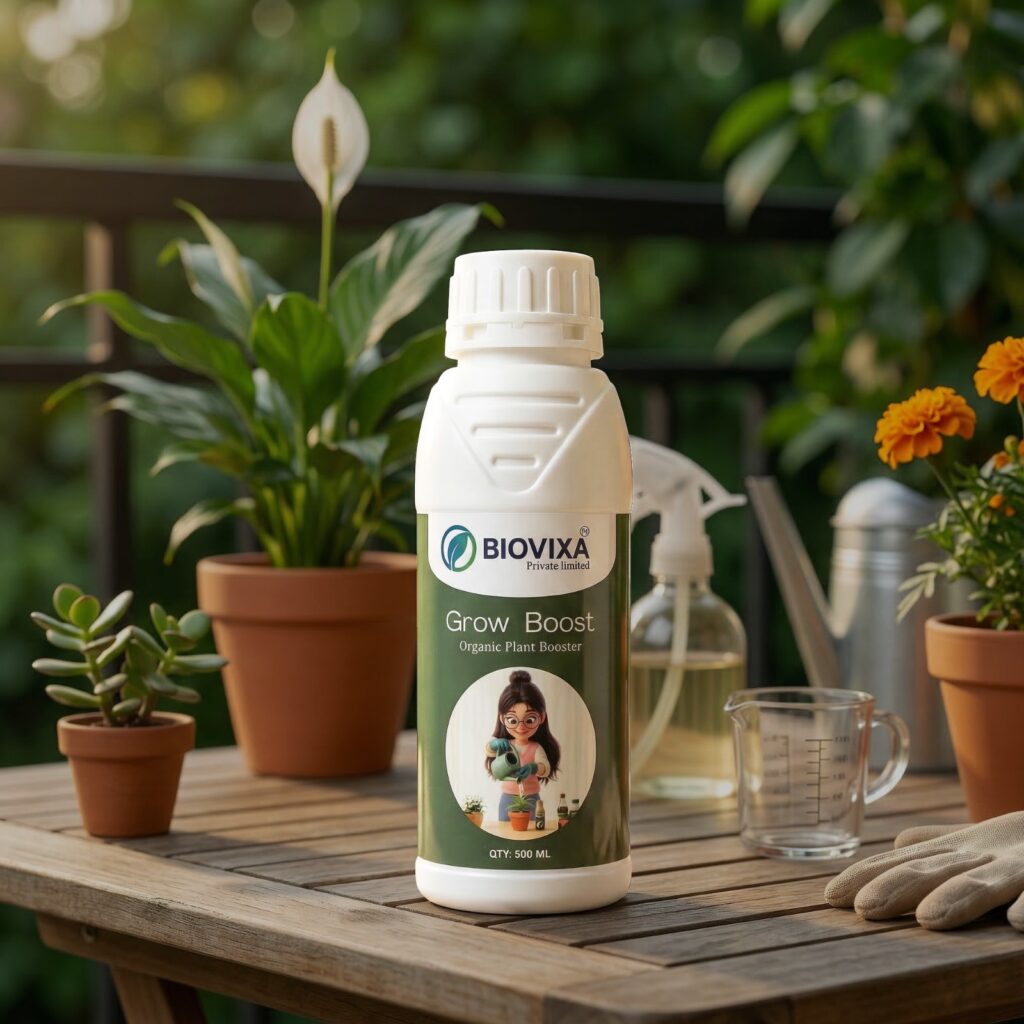
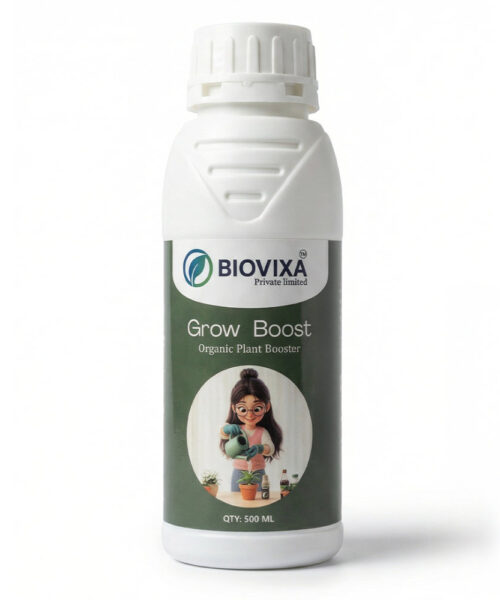
How to fix it: Feed with a nitrogen-rich fertilizer or a balanced NPK formula. For a quick organic boost, Biovixa GrowBoost is excellent here — it supports overall vegetative growth and helps restore that deep green colour rapidly.
🌱 Biovixa GrowBoost → — restore lush, green growth fast.
2. Purple or Reddish Leaves → Phosphorus Deficiency
What it looks like: Leaves develop a reddish, purplish, or bronzed tint — especially on the undersides. Older leaves are usually affected first. Growth slows noticeably and root development feels stunted.
What’s happening: Phosphorus drives root development, energy transfer, and flowering. Without it, your plant struggles to establish strong roots and has no fuel to push into its blooming phase.
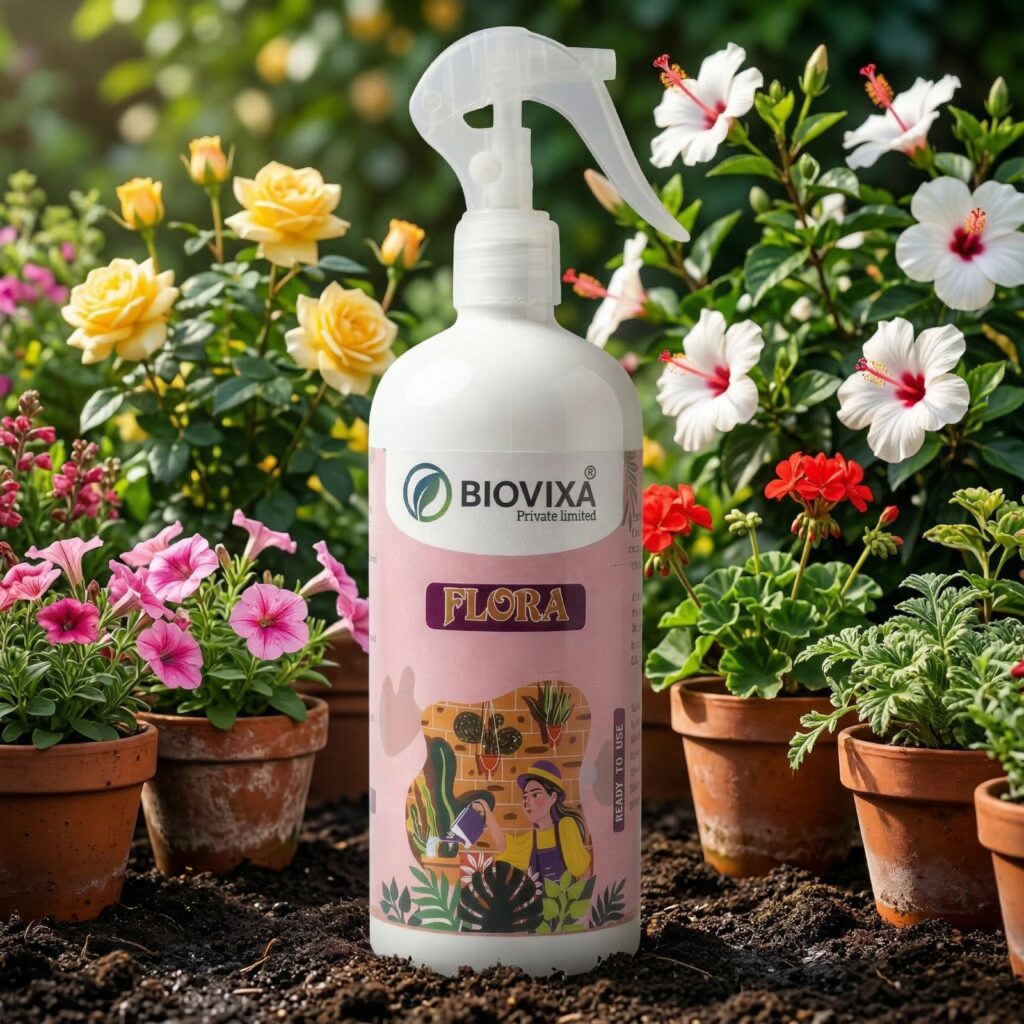
How to fix it: Use a phosphorus-rich fertilizer, especially during early growth stages and pre-flowering. Biovixa FloraMax is specifically formulated to support flowering and phosphorus-dependent functions — ideal when you notice your blooming plants holding back.
🌸 Biovixa FloraMax → — trigger blooms and strengthen root activity.
3. Brown Leaf Edges & Weak Stems → Potassium Deficiency
What it looks like: Leaf edges and tips start turning brown and crispy — almost like the plant has been scorched. Stems feel weak and flimsy. Fruits or flowers, if any, appear underdeveloped or drop prematurely.
What’s happening: Potassium is the plant’s overall regulator — it controls water movement, strengthens cell walls, and supports fruiting and flowering. A potassium-deficient plant is essentially structurally compromised from the inside.
How to fix it: Apply a balanced NPK fertilizer with adequate potassium content. Biovixa Nutri Magic Granular delivers a well-rounded nutrient profile including potassium — making it ideal for long-term soil health and preventing this deficiency from recurring.
🌾 Biovixa Nutri Magic Granular → — balanced nutrition that keeps deficiencies away.
4. Yellow Leaves with Green Veins → Iron or Magnesium Deficiency
What it looks like: The leaf turns yellow but the veins stay green — giving it a distinctive “net” pattern. This symptom typically shows up on younger, newer leaves first (iron deficiency) or older leaves first (magnesium deficiency).
What’s happening: Both iron and magnesium are critical for chlorophyll production. Iron deficiency is often caused by overly alkaline soil — the iron is technically present, but the roots can’t access it. Magnesium deficiency is more common in plants that have been in the same pot soil for too long.
How to fix it: Check your soil pH — it should be slightly acidic to neutral for most plants. Repot with fresh, nutrient-rich soil and feed with a complete fertilizer. Regular application of Biovixa GrowSide provides micronutrient support alongside macronutrients, helping prevent both iron and magnesium shortfalls.
🌿 Biovixa GrowSide → — side-dress your plants with complete, balanced nutrition.
5. No Flowers, Slow Growth → General Nutrient Exhaustion
What it looks like: Your plant looks alive but not thriving. It’s not producing new leaves, hasn’t flowered in months, and just seems… stuck.
What’s happening: This is usually not a single deficiency but overall nutrient depletion — especially common in potted plants that haven’t been repotted or fertilized in over a year. The soil is simply exhausted.
How to fix it: This one calls for a full reset. Repot if possible, refresh the soil, and start a regular fertilizing routine. For flowering plants specifically, combine Biovixa GrowBoost for the initial push and Biovixa FloraMax to then channel that energy into blooms.
Quick Diagnosis Guide
| What You See | Likely Deficiency | Biovixa Fix |
|---|---|---|
| Yellow leaves spreading upward | Nitrogen | GrowBoost |
| Purple/red tint on leaves | Phosphorus | FloraMax |
| Brown, crispy leaf edges | Potassium | Nutri Magic Granular |
| Yellow leaves, green veins | Iron / Magnesium | GrowSide |
| No growth, no flowers | General exhaustion | GrowBoost + FloraMax |
The Best Fix Is Prevention
Treating a deficiency after it shows up works — but preventing it from happening in the first place is always the better play.
A consistent fertilizing routine is all it takes. Feed your plants every 2–4 weeks during the growing season. Use a balanced organic fertilizer as your base. Add specific boosters during flowering or growth phases. Keep your soil healthy, and your plants will rarely — if ever — show signs of distress.
Think of it like this: a well-fed plant is a resilient plant. It fights off pests better, recovers from stress faster, and flowers more reliably. Nutrition is the foundation of everything.
Feed Smarter with Biovixa
Your plants don’t need guesswork. They need the right nutrients, at the right time, from a brand that actually understands plant health. Biovixa’s organic range covers every nutritional need — from deep-root nourishment to bloom-triggering formulas — so your plants never go without.
Explore the full Biovixa range →
Spotted a symptom on your plant that isn’t listed here? Write to us at hello@biovixa.in — we’ll help you diagnose and fix it.